


Safety during training depends on several key factors: equipment quality, experience, type of activity, the thoroughness of the trainer, and proper safety measures. One of the fundamental pieces of equipment that significantly impacts safety is the gymnastics mat.
It’s hard to imagine a comfortable – and more importantly, safe – workout without this essential accessory. A mat greatly reduces the risk of injury and partially eliminates the danger of serious falls. What’s more, it proves useful in nearly every discipline – from gymnastics to aerial acrobatics.
A good sports mat is an investment that works just as well at home as it does in a pole dance school, fitness club, or aerial studio. It’s an absolute must-have for any athlete practicing gymnastics or acrobatics. For children, it can also be a great place for safe play. Reliable and safe gymnastics mats for various activities are available at Flying Rose.
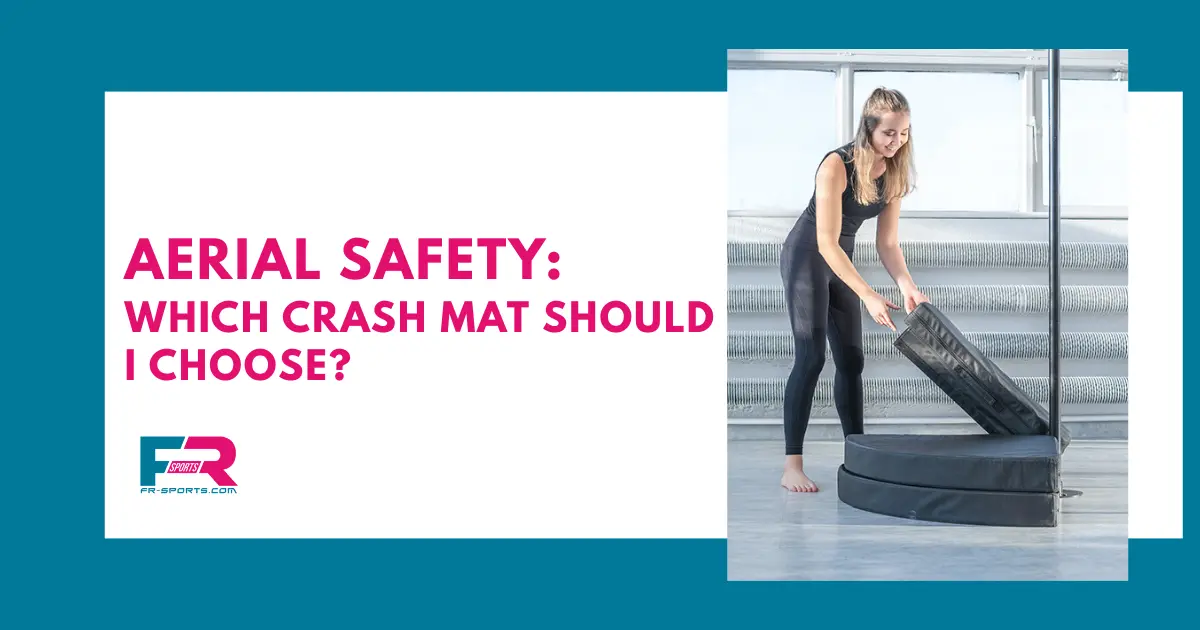
Which Gymnastics Mat Should You Choose?
Choosing the right mat depends primarily on the type of activity and individual needs. A different mat will be suitable for pole dance than for children’s play in a home gym. What should you look for? Pay special attention to:
- Thickness
- Size
- Firmness
- Filling
- Cover material
The size of the mat should match both the available space and the nature of the training. The most commonly selected model is 200x120x10 cm – it’s versatile, comfortable, and suitable for most exercises. However, it’s not always the best choice. Why?
Size Matters
The most popular mats – 200x120 cm – have their limitations. Training often ends with sideways falls, and the shorter edge (120 cm) can be insufficient, resulting in someone landing with their head, knee, or elbow outside the mat.
The ideal option is a circular or square mat with a diameter or side length that matches the height of the person training – for example, 160 cm in diameter or 160x160 cm. Of course, we rarely land perfectly in the center, but our bodies naturally adjust in mid-air and don’t fall stiffly. That’s why this surface area is usually enough to cushion the fall.
For professional training – especially aerial disciplines – we recommend a mat sized 200x200 cm. It provides maximum comfort and safety.
For aerial acrobatics, such as aerial hoop or aerial silks, both classic rectangular and circular mats are useful. The thickness depends mainly on the height at which the apparatus is hung – the minimum is 10 cm, but for higher mounting points, we recommend 20 cm thick mats.
In pole dance, mats are usually circular (diameter between 120 and 160 cm) and 5 to 15 cm thick. They typically include a special cutout to easily fit around the pole. For home use, foldable mats are especially practical – easy to store between sessions.
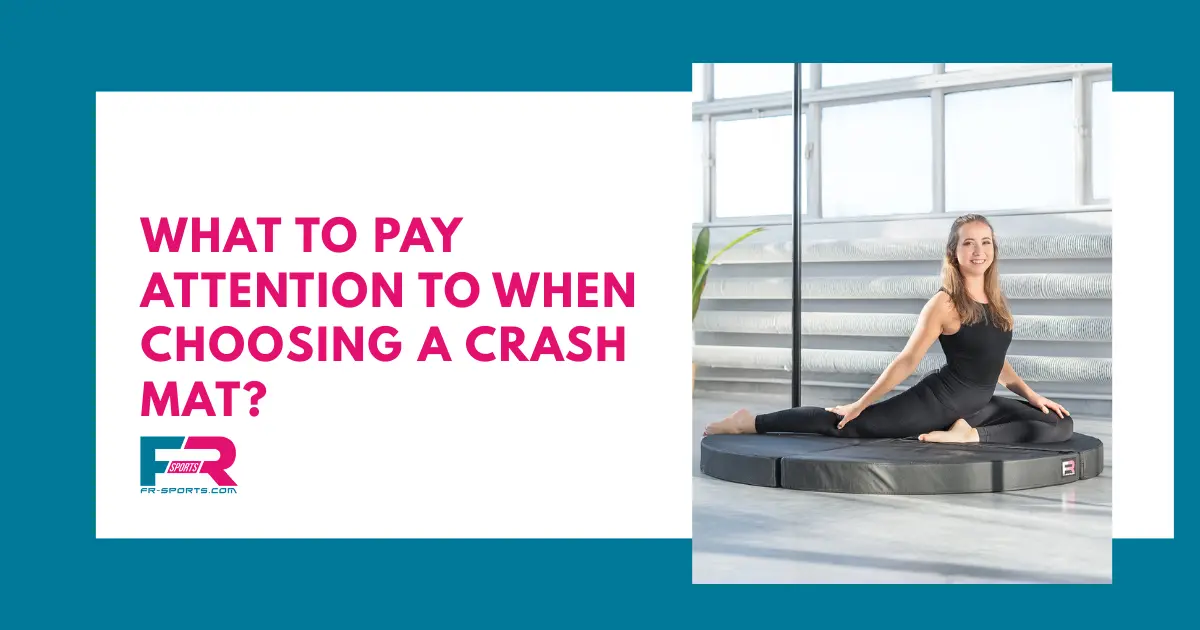
Firmness and Filling – What’s Important?
Thickness That Matches the Height
Just as important as the surface area is the thickness of the mat. A good rule of thumb is that the thickness should be around 5% of the height at which the apparatus is suspended. For instance, if the aerial hoop is hung at 2 meters, a 10 cm mat is sufficient. For aerial silks suspended at 4 meters, a 20 cm mat is advisable.
Firmness That Protects – but Doesn't Hinder
The firmness of the mat should match the intensity and type of training. Softer models are ideal for light workouts, stretching, and for children. In aerial acrobatics, it’s best to find a balance: the mat should be more soft than hard. A mat that is too hard won’t absorb impact properly during a fall, while one that is too soft can make movement and starting positions more difficult. The goal is to absorb energy effectively while still providing enough stability.
The Right Filling Makes a Difference
The mat’s filling is also crucial. The ideal filling doesn’t compress or lose its shape over time. The most common choice is polyurethane foam, which retains its properties for a long time when combined with a good-quality cover material such as PVC or synthetic leather (skai).
What About Air Tracks?
Though they look impressive and are currently trending, air tracks are not suitable for safety during aerial or pole dance training. Their purpose is to return energy, not absorb it – the exact opposite of what a proper safety mat should do.
Mats for Pole Dance
When it comes to pole dance, things are a bit simpler. Circular mats with a diameter of 150 or 160 cm and a thickness of 10 cm are ideal. This combination ensures both safety and comfort during training.
What Are Gymnastics Mats Made Of?
Our mats come with two types of covers: PVC (Plawil) and synthetic leather (skai). Both are waterproof and easy to clean – just use water and a soft cloth. Skai is great for home use, while PVC offers higher durability, making it perfect for training halls or outdoor workouts.
How to Take Care of a Gymnastics Mat?
After each session, it's important to clean and disinfect the mat thoroughly. Maintenance should be tailored to the type of material, but a universal method is wiping it down with a soft cloth soaked in a mild detergent. It’s essential that the mat is completely dry before folding and storing it.
Final Thoughts
Choosing the right mat isn’t just about comfort – it’s about safety above all. If you practice gymnastics, acrobatics, or pole dance, don’t compromise. Invest in proper equipment and enjoy every training session with peace of mind.